Mastering the Battlefield Extraction
Trust, timing, and the art of the horse-assisted pickup

The ring was silent. On most days, it buzzes with the energy of jumpers and students, all vying for their turn at the jumps. Today, though, the quiet is a gift—a rare moment when only soft horse snorts and the occasional creak of leather break the stillness.
To recap: Last month, I dragged my neighbour Anna (horse jumper extraordinaire) to the stables to resolve a lingering question. Could a warrior extract a Leighis (army medic) from battle using nothing but an Enbarr? No flashy tricks, no specialized gear—just teamwork and trust.
We began by grooming Tuxedo, Anna's horse, while reviewing tack terminology. Then we moved to the ring for practical drills.
And yes, I can confirm that I won't be attempting any Legolas-esque leaps or arrow-shooting acrobatics... ever. Instead, we focused on breaking down realistic extraction scenarios and training needs, including the challenge of loading Enbarr onto barges, because waterways are major highways in my world.
Steering the Horse
“A horse’s sense of touch is sensitive,” Anna explained, running a hand down Tuxedo’s neck. “Especially jumpers. You don’t need reins to guide them—you can use your head. Look where you want to go, and they’ll follow.”
Easier said than done. My first attempts at head-guiding were a masterclass in chaos. Distracted by a pile of manure near some plastic flowers (why are those there?), I steered Tuxedo straight into a corner. Twice. His ears flicked back, confused but patient. “He’s brilliant,” Anna assured me. “You just scrambled his signals.”
It took a while to shake off the awkwardness of loose reins and a basic saddle with no pommel (jumper setup). If my warriors are going to pull this off, they’ll need focus—a lot of it.
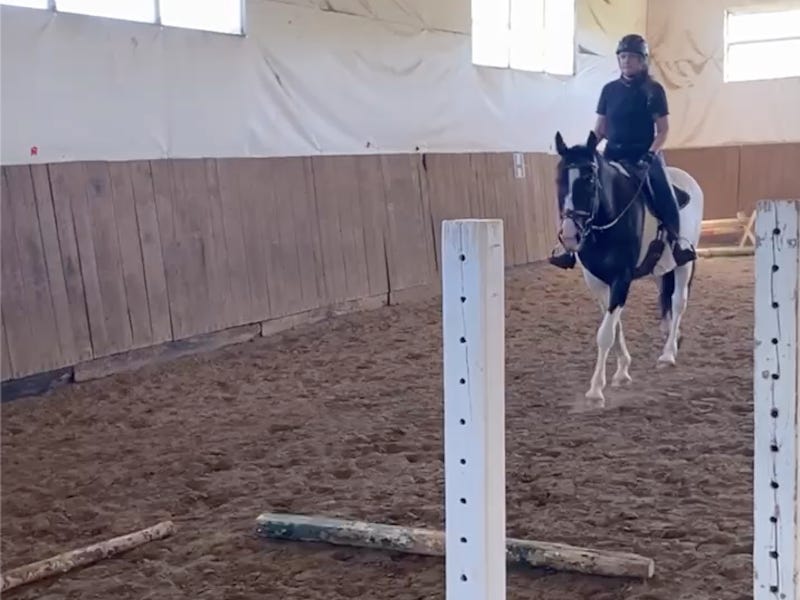
“He responds to leaning too,” Anna added. Leaning forward urged Tuxedo into a trot; squaring my shoulders and leaning back halted him mid-stride.
Once I mastered steering (aka not drifting into corners), the lean became our unspoken language as we tackled jumping—or in my case, walking over poles and through obstacles to understand how horses move and respond.
We abandoned the “jump” more times than I care to admit. I got very familiar with the call to “start again.” The preparation for each jump takes time and precision—because it has to be perfect to prevent injuries.
That’s when it hit me: the key to a successful extraction isn’t speed, strength or even fitness—it’s trust, patience, and practice.
Next comes the important question. “Is an horse-assisted extraction possible?”
She grinned. "In competitive events like barrel racing," she explained, "there’s something called a ‘pick-up or buddy race’ where one rider sprints to grab a second person as they race around a barrel.”
Tell me more.
“Theoretically, momentum helps the second rider mount. But, in practice, the buddy falls off because most haven’t practiced the maneuver. It’s rodeo comedy gold—but it can work with training.”
“So training is key?”
“Yeah. And your warriors wouldn’t be galloping around barrels in battle.” She paused, thinking. “The pickup would have to happen as the horse rushes past. The riders need to time it right—grabbing each other by the forearm.”
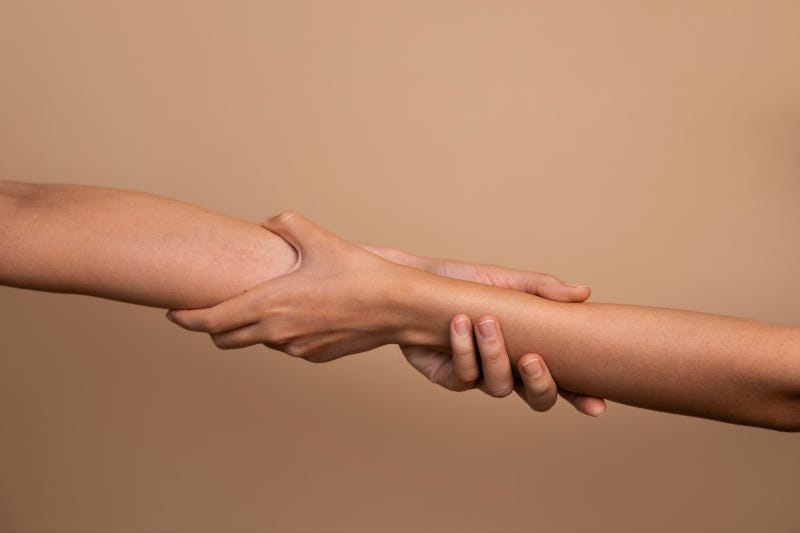
So, what I saw with rodeo clowns at the Stampede wasn’t a figment of my imagination. “What’s the secret to pulling this off?”
“The rider on the horse has to lean forward over the withers to counterbalance the second person swinging up behind them onto the rump. They can’t let go until the person is behind them. The key to this is good shoulder flexibility.”
Ahh—okay. I won’t be writing about shoulder flexibility in any scene, but I can definitely picture the extraction unfolding, along with a few practice scenes. Rush by, grab wrists, lean, and up. Surely the warriors in my world could manage this maneuver in battle.
“Does size matter? Does the person on the ground need to be smaller than the rider?”
“I don’t think it matters much. They just need to be strong enough to hold on. I’ve seen girls do this on big horses, lifting men up behind them. It takes a good grip, a deep lean, and agility to swing onto the rump. But yeah, it’s definitely doable with practice.”
So, I’m not crazy like editors have told me. Question answered—check.
The Barge
“What about a barge?” I pressed as I dismounted, the leather of the saddle creaking under my hands as I pushed away. In my world, waterways are lifelines, and Enbarr need to adapt to the rocking motion of a boat.
The answer was straightforward: “Horses won’t step onto unsteady ground or over unfamiliar objects. They’re stubborn and you have to build acceptance—one object at a time.”
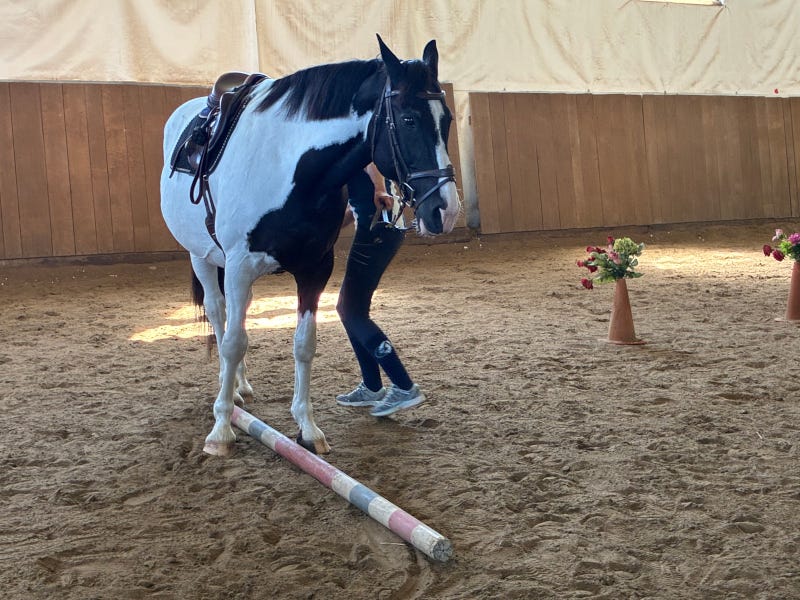
We worked with poles, getting Tuxedo to walk with an object between his legs. It was surprisingly difficult for him. “It’s because of their sight,” Anna said. “Horses see almost 360 degrees, but their blind spots are right below their nose and behind their tail. You have to train them to trust you in those blind spots so they don’t spook.”
Ohhh… spooking on a barge would be bad… or dramatic.
It took real work to get Tuxedo to stand with a pole between his legs. He hesitated, his breath coming in short puffs as he refused to budge. This isn’t a one-and-done training activity. "The concept blows their minds." Anna threw her hands up in an exploding gesture as she stepped away. “With a barge, the easiest thing is to walk them forward both on and off. Backing up? Horses get testy.”
That changes some details in my mental blueprint. I mulled this over as we headed back into the stables to regroup.
Aftercare
“There’s more to do,” Anna said. “Your Enbarr are athletes, right? They need to stretch, just like humans, to prevent injuries.”
It didn’t take much to coax Tuxedo into his stretching routine—carrots and little bits of candy cane did the trick.
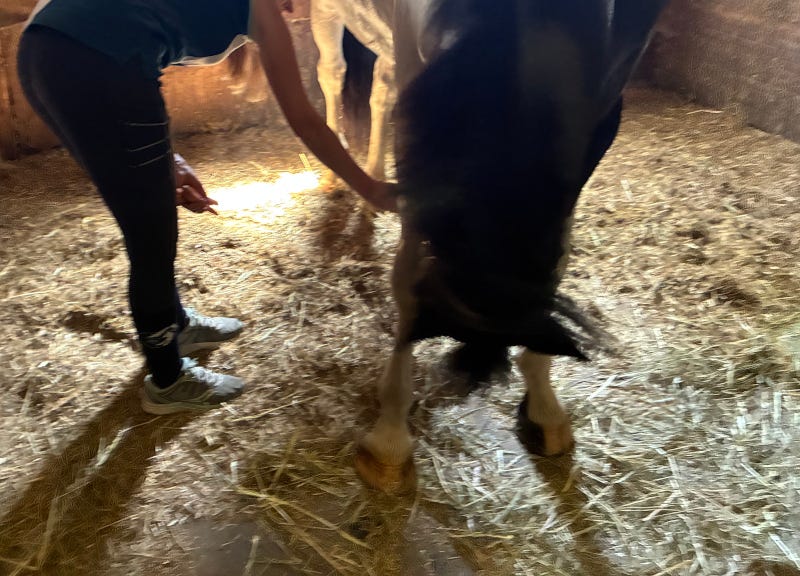
“Head to rump, head under legs,” she instructed. It’s a simple routine designed to stretch his shoulders and back.
Afterward, we headed for a rainwater shower. “This is so going into one of my books,” I said.
I could picture Nickadameous, Willow, Sage, or any of the other Enbarr enjoying a cool shower on a hot day. In fact, Kieran would probably rig up some kind of trigger mechanism and train the creatures to use it themselves. You see, Kieran’s obsessed with hammams—it’s his thing.
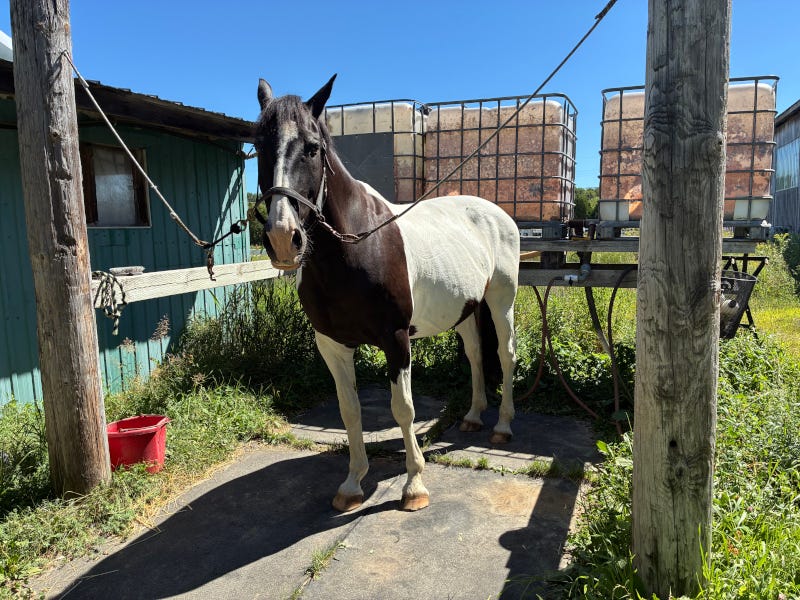
And after a nice long shower and a good squeegee, Tuxedo was released back into the field, where he promptly rolled in the dirt, coating himself in a fresh layer of dust.
I could only laugh.
As I gathered my gear, I concluded that the Leighis and warriors wouldn't be using flash or dramatics during an escape. Instead, they'd rely on timing, practice, and absolute trust in each other.